
Hip Replacement Surgery in Navi Mumbai
Hip pain making every step harder than it should be?
DAA Total Hip Replacement uses a muscle-sparing technique to relieve pain and help you walk sooner, so you can get back to your daily life with confidence.
Australia Fellowship-trained in Direct Anterior Hip Replacement and Robotic Hip & Knee Replacement.
Not sure if you need surgery?
What Makes DAA Total Hip Replacement Different
That difference matters after surgery. Because the surrounding muscles stay undisturbed, many patients experience less pain in the early days and are able to bear weight and start walking sooner. Dr. Avinashdev Upadhyay builds every recovery plan around early movement, helping patients regain trust in their new hip quickly and safely.
This technique is commonly recommended for advanced osteoarthritis, avascular necrosis, rheumatoid arthritis, post-fracture arthritis, and hip dysplasia that hasn’t responded to non-surgical treatment.
A Closer Look at the Hip Joint
1
2
3
2
3
What Usually Leads to a DAA Hip Replacement
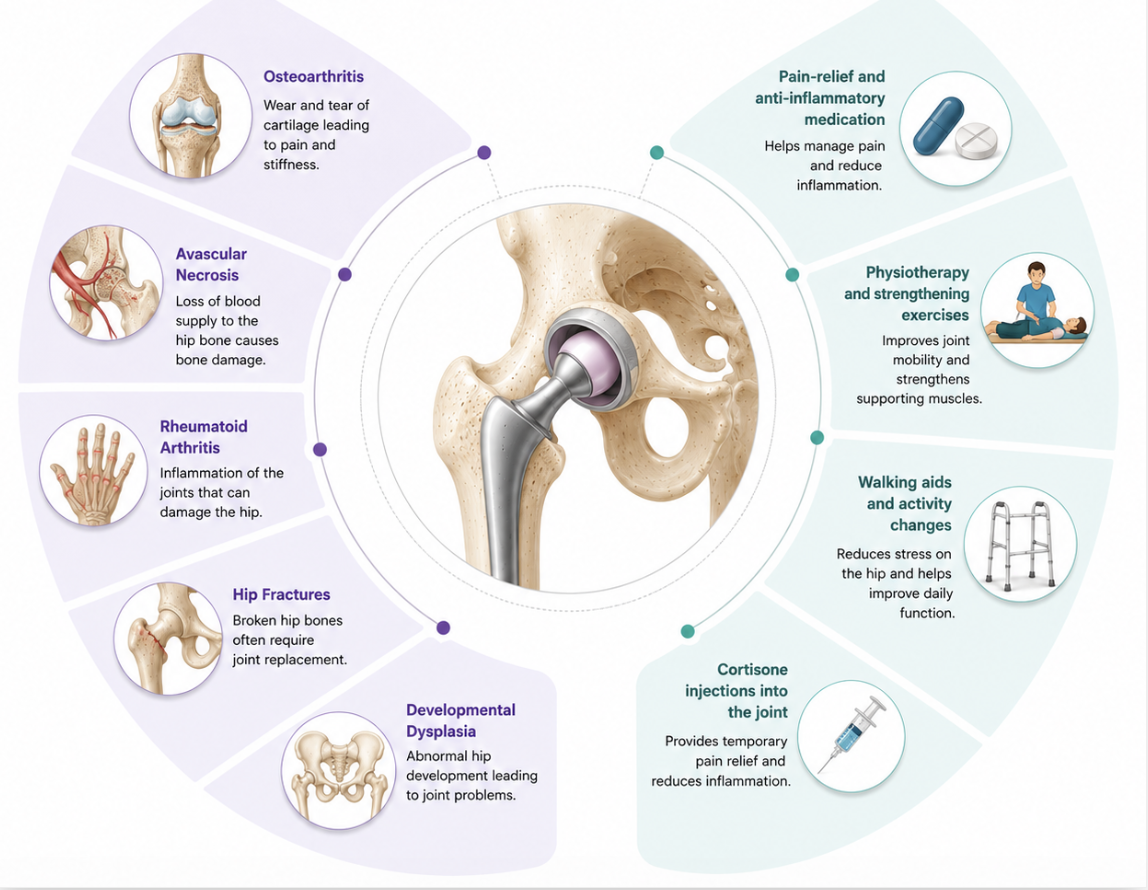
Dr. Avinashdev Upadhyay doesn’t jump to surgery, every non-surgical route is explored first, including:
- Pain-relief and anti-inflammatory medication
- Physiotherapy and strengthening exercises
- Walking aids and activity changes
- Cortisone injections into the joint
Surgery only becomes the recommendation once these options stop making a real difference.
DAA vs the Conventional Posterior Approach
Neither technique is universally “better” — the right choice depends on your anatomy and what your surgeon recommends after assessment. Here’s how the two compare:
|
Aspect |
Direct Anterior Approach (DAA) |
Conventional (Posterior) Approach |
|
How the Joint Is Reached |
Through gaps between muscles, without cutting them |
By detaching certain muscles to access the joint |
|
Pain After Surgery |
Usually lower, thanks to less soft-tissue disturbance |
Typically higher in the first few days |
|
Risk of Dislocation |
Lower, since muscle support stays intact |
Somewhat higher, especially early on |
|
Time to Walking |
Often quicker, sometimes within a day |
Standard recovery pace over several weeks |
|
Typically Recommended For |
Most patients seeking faster mobility |
Revision surgeries or specific anatomical cases |
Dr. Avinashdev Upadhyay will walk you through which technique fits your hip and your recovery goals during your consultation.
Wondering if robotic surgery is suitable for you?
Let’s evaluate your case.
What Gets Evaluated Before Recommending Surgery
Getting the timing and technique right matters as much as the surgery itself. During your consultation, Dr. Avinashdev Upadhyay looks at:
trouble walking, sitting, or sleeping because of hip pain is a strong signal.
an active professional and an older patient may need different implant choices and timelines.
carrying extra weight adds pressure on the joint; getting closer to a healthy weight beforehand helps recovery.
conditions like diabetes or heart disease are managed carefully to keep surgical risk low.
What Patients Gain From DAA Total Hip Replacement
For patients who’ve tried everything else, DAA hip replacement can genuinely change day-to-day life. It’s not only about eliminating pain — it’s about getting back the freedom to move without thinking twice.
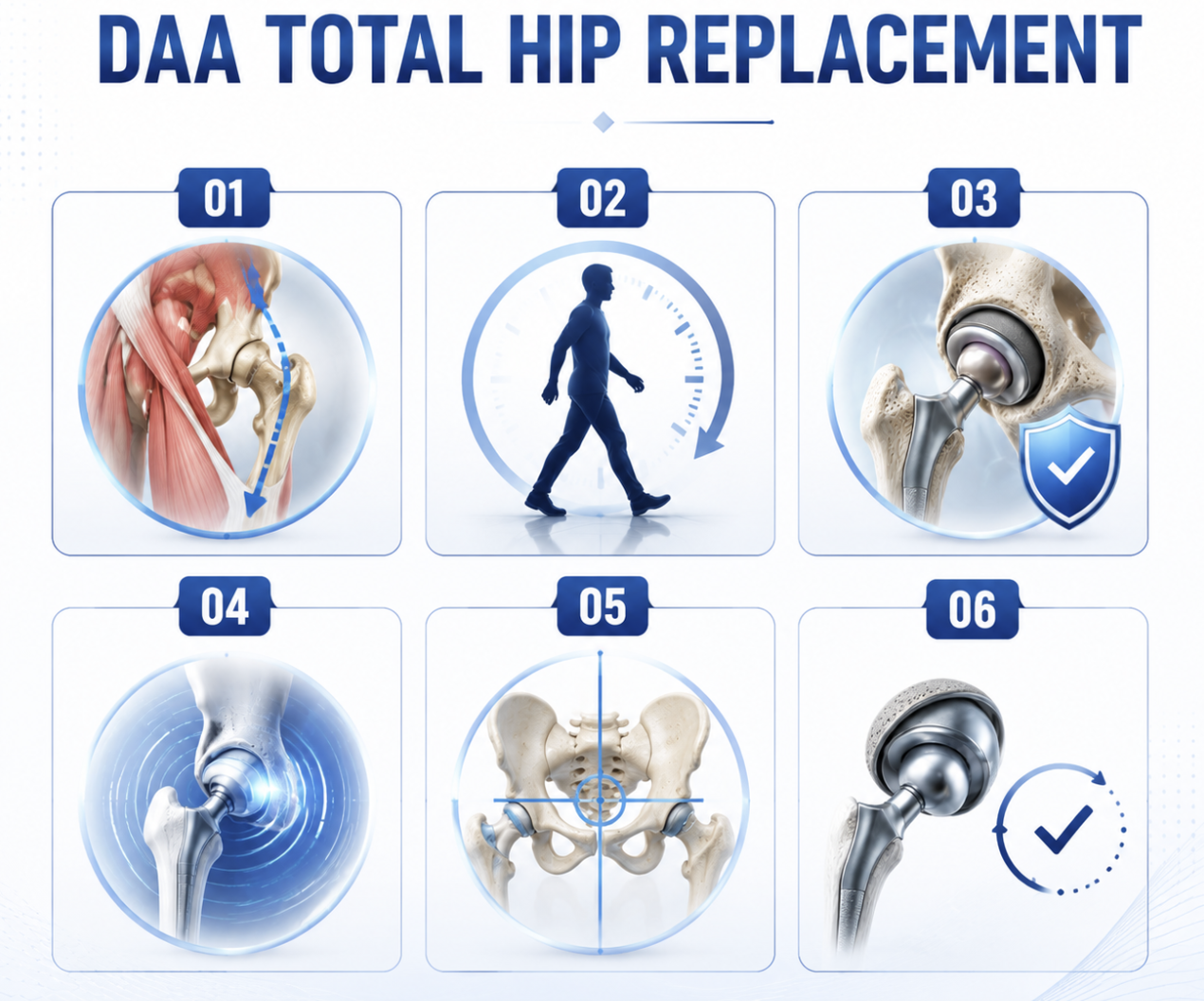
- Muscles stay intact – the surgical path works around muscles instead of through them.
- Quicker early movement – many patients are walking with minimal support within a day.
- Lower dislocation risk – preserved muscle support keeps the new joint more stable.
- Less pain post-surgery – reduced soft-tissue trauma often means a smoother early recovery.
- A more stable, balanced hip – proper alignment restores dependable movement.
- Implants built to last – many modern hip implants last 20 years or longer, depending on activity level, bone quality and overall health.
Your Recovery Timeline
Most patients want to know one thing above all else: how soon will I be back to normal? Here’s what a typical recovery looks like after robotic knee replacement:
Dr. Avinashdev Upadhyay tailors this timeline to your specific health, age, and activity levels during your recovery plan.
Find out whether Direct Anterior Hip Replacement is the best option for your hip.
Cost of DAA Hip Replacement in Navi Mumbai
The cost of DAA total hip replacement at UMC Hospitals depends on whether one or both hips are being treated and whether Indian or imported implants are used.
| Package | Implant Type | Starting From |
| Unilateral THR (Single Hip) | Indian Implant | ₹2,44,555 |
| Unilateral THR (Single Hip) | Imported Implant | ₹3,33,555 |
| Bilateral THR (Both Hips) | Indian Implant | ₹4,77,555 |
| Bilateral THR (Both Hips) | Imported Implant | ₹6,77,555 |
Final cost depends on your specific case, implant choice, and room category, and can only be confirmed after Dr. Avinashdev Upadhyay evaluates your X-rays and clinical condition.
|
What’s Included in the Package: |
|
Is DAA Hip Replacement Right for You?
If chronic hip pain from arthritis, avascular necrosis, or old fractures is limiting your independence and nothing else has worked, you may be a strong candidate for DAA total hip replacement. This is especially true for patients over 60 with significant joint wear, or anyone hoping for a faster return to normal activity.
That said, certain anatomical factors or previous hip surgeries can make a different technique more suitable. The only way to know for sure is a detailed, individual assessment — which is exactly what a consultation with Dr. Avinashdev Upadhyay provides.
Why Robotic Surgery Isn't Necessary for Everyone
Robotic surgery is an excellent option for many patients, but it is not necessary in every case. During your consultation, Dr. Avinashdev Upadhyay will recommend the approach that best suits your knee, anatomy, and goals — rather than defaulting to one technique for every patient.
What Our Patients Say
Why Patients in Navi Mumbai Choose Dr. Avinashdev Upadhyay
Dr. Avinashdev Upadhyay is a fellowship-trained hip and knee replacement surgeon, fellowship-trained in Australia in Robotic Hip & Knee Replacement, with dedicated training in advanced robotic joint replacement techniques. His practice is centred on one outcome: getting patients back to a full, active life with a hip that moves naturally.
Focused expertise
Hip and knee replacement isn’t a side interest — it’s the core of Dr. Avinash’s practice.
Modern surgical technique
From the DAA approach to the latest implant systems, care is grounded in current, evidence-based practice.
A patient-first process:
Every treatment plan starts with understanding your pain, your lifestyle, and your goals before any surgical decision is made.
Easy access
Dr. Avinash consults across Navi Mumbai, including Seawoods and Nerul, making expert care accessible for patients from Kharghar, Thane, and nearby areas.

Years Experience
Meet Your Surgeon
Why Patients Choose Dr. Avinashdev
You can learn more about his training and experience on the about us page. For general background on the technology, the American Academy of Orthopaedic Surgeons and NHS both offer independent, patient-focused information on joint replacement and surgical robotics.
Ready to move without pain again?
Book your appointment with Dr. Avinashdev Upadhyay, DAA hip replacement surgeon in Navi Mumbai.
Frequently asked questions
What exactly is the Direct Anterior Approach?
DAA is a hip replacement technique where the surgeon reaches the joint through the front of the hip, working between natural muscle gaps instead of cutting through muscle. This muscle-sparing method is linked to less pain after surgery and an earlier return to walking for many patients.
How long is the surgery itself?
Most DAA hip replacements take one to two hours. Since it’s done under spinal or general anaesthesia, you won’t feel any pain during the procedure.
When can I expect to start walking again?
Many patients are up and walking with minimal support within 24 hours of surgery. Dr. Avinashdev Upadhyay’s recovery plans focus on early, guided movement to help you rebuild strength and confidence quickly.
Is DAA actually safer than the traditional approach?
DAA generally carries a lower dislocation risk and tends to cause less post-operative pain, since it avoids cutting through muscle. That said, the best technique for you depends on your specific anatomy, which Dr. Avinash will evaluate during your consultation.
How long will my new hip implant last?
Many modern hip implants last 20 years or longer, depending on activity level, bone quality and overall health, along with how closely you follow post-surgery care instructions.
Can I sit cross-legged after DAA hip replacement?
Many patients can gradually return to sitting cross-legged after Direct Anterior Approach (DAA) hip replacement, but the timing varies depending on your recovery, flexibility, and overall health. Most patients should avoid forcing this position during the early healing phase. Your surgeon will advise you when it is safe to resume based on your progress. The goal is to return to daily activities comfortably and safely rather than rushing recovery.
When should I see a knee specialist?
Consult a specialist if knee pain lasts more than 2–3 weeks, walking or stairs become difficult, the knee swells or gives way, pain affects sleep, or medication gives only temporary relief. Early treatment can delay or avoid surgery.
What is Robotic Total Knee Replacement?
It uses advanced computer-guided technology to plan and perform the surgery with high precision, allowing accurate implant positioning and alignment — which can mean a more natural-feeling knee and a smoother recovery.
Is robotic-assisted knee replacement safe?
Yes. It is a well-established technique with a strong safety record. As with any joint replacement surgery, risks such as infection or blood clots exist but are minimised through careful pre-surgical evaluation and modern surgical protocols.
How do I know if I need robotic-assisted or conventional knee replacement?
The right approach depends on factors such as the extent of arthritis, joint alignment, and any prior injuries or deformities. Dr. Avinashdev Upadhyay will assess your knee individually during consultation and recommend the technique best suited to your anatomy and goals.
How long does a knee replacement implant last?
Modern knee replacement implants are designed to be durable and long-lasting. With proper implant positioning, good bone health, and maintaining a healthy lifestyle, many implants can last 20–25 years or longer. Longevity depends on factors such as your age, activity level, weight, and overall health. During your consultation, Dr. Avinashdev Upadhyay will discuss the most suitable implant option based on your individual needs.
Can I sit cross-legged after DAA hip replacement?
Many patients can gradually return to sitting cross-legged after Direct Anterior Approach (DAA) hip replacement, but the timing varies depending on your recovery, flexibility, and overall health. Most patients should avoid forcing this position during the early healing phase. Your surgeon will advise you when it is safe to resume based on your progress. The goal is to return to daily activities comfortably and safely rather than rushing recovery.
When can I climb stairs?
Most patients begin climbing stairs with support and guidance from a physiotherapist within 1–2 days after surgery. As your strength and confidence improve, stair climbing becomes easier over the following few weeks. Full independence depends on your recovery, muscle strength, and balance.
When can I drive?
Most patients can resume driving around 4–6 weeks after surgery, provided they have good muscle control, are walking comfortably, are no longer taking strong pain medications, and can safely perform an emergency stop. Always discuss this with your surgeon before returning to driving.
When can I climb stairs?
Most patients begin climbing stairs with support and guidance from a physiotherapist within 1–2 days after surgery. As your strength and confidence improve, stair climbing becomes easier over the following few weeks. Full independence depends on your recovery, muscle strength, and balance.
Can I sleep on my operated side?
Yes, many patients can eventually sleep on the operated side once the wound has healed and tenderness has settled. During the first few weeks, sleeping on your back or the non-operated side with a pillow between your legs is often more comfortable. Your surgeon will guide you based on your recovery.
Can both hips be replaced together?
Yes, in carefully selected patients, both hips can be replaced during the same operation (simultaneous bilateral hip replacement). However, this is not suitable for everyone. Your age, general health, fitness, and the severity of arthritis are all considered before deciding whether a single-stage or staged procedure is the safer option.
Will airport scanners detect the implant?
Modern hip replacement implants may occasionally trigger airport security scanners. If this happens, simply inform the security staff that you have a hip implant. Most airports are familiar with joint replacement implants, and additional screening can usually be completed quickly if required.