
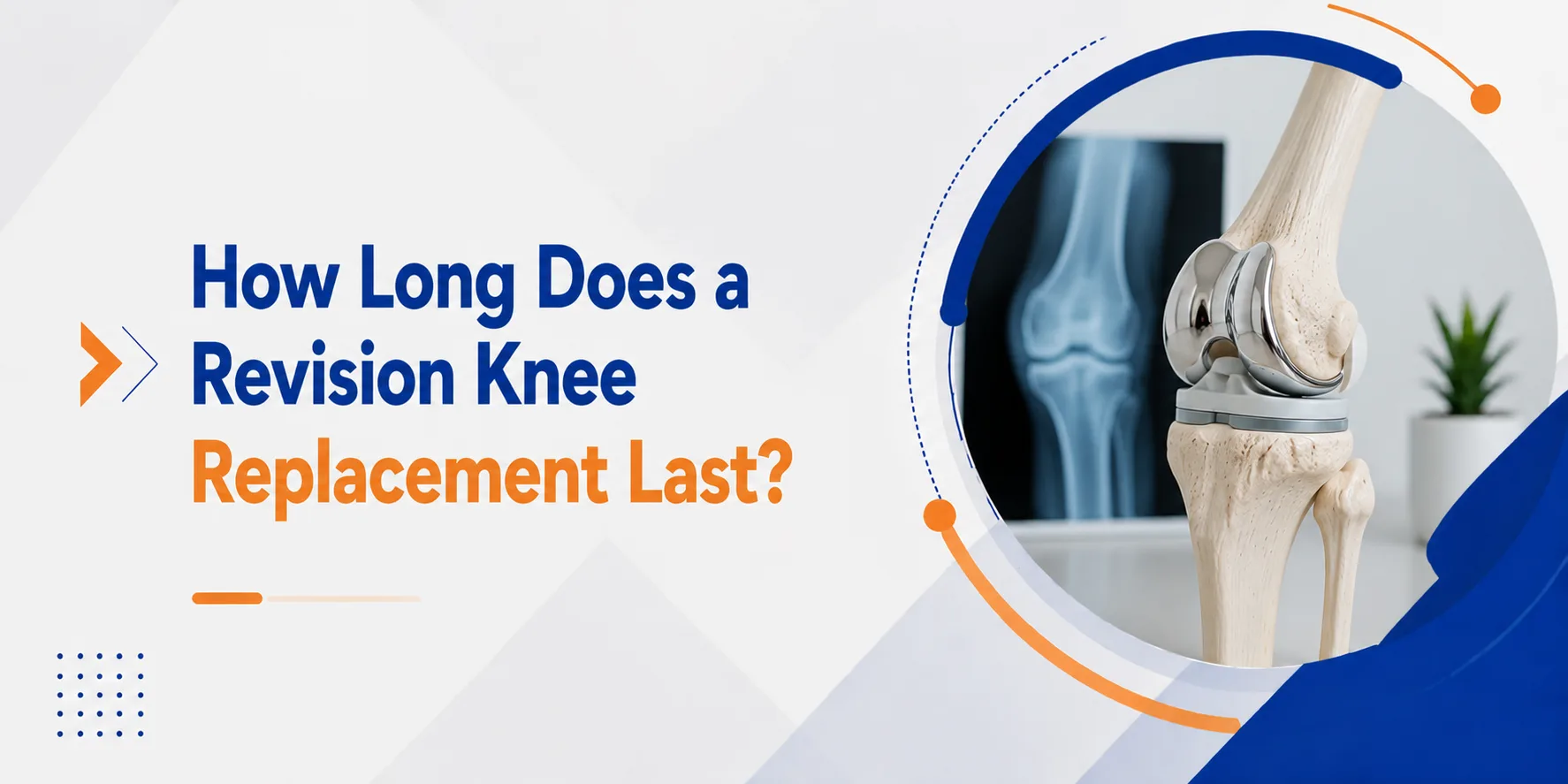
A revision knee replacement typically holds up for 10 to 15 years, with some implants performing well past 20. Revision knee replacement surgery tends to have a shorter working life than a first time replacement, mainly because there’s less healthy bone to anchor into and the procedure puts more stress on the joint. How long an implant lasts still comes down to the reason for revision, activity level, and how well the components bond with the remaining bone.
According to Dr. Avinashdev Upadhyay, an orthopedic surgeon in Navi Mumbai, “A revision knee doesn’t start from the same foundation as the first surgery. Expecting identical longevity from a rebuilt joint isn’t realistic, but a well planned revision can still last well over a decade.”
Dr. Upadhyay’s Clinical Tip
“Bring your previous X-rays, implant details, and surgical records to your consultation. They help your surgeon understand exactly what’s changed since the original replacement, which shapes the whole revision plan.”
Wondering what to expect from your revision surgery?
Why Does a Revision Knee Replacement Last Less Than the Original?
The shorter lifespan comes down to what the surgeon has to work with, not a flaw in the surgery itself.
Bone Quality: Less healthy bone stock remains to anchor the new implant, since the first surgery already used up some of that margin.
Implant Complexity: Revision components are often larger and more constrained to compensate for lost bone or ligament support. More complexity can increase the potential for wear over time.
Surgical Stress: Revision procedures run longer and disturb more tissue than a primary replacement, affecting healing and implant performance over time.
Reason for Revision: Infection related revisions carry a different outlook than those done for mechanical loosening, since the underlying problem shapes what comes next.
None of this makes revision surgery a lesser option. It simply calls for realistic expectations. Explore robotic knee replacement with Dr. Upadhyay to see how precision planning supports complex cases.
What Actually Determines How Long a Revision Lasts?
A few factors matter more than the surgery date alone.
Activity Level: High impact activity puts more repeated stress on a revision implant than routine movement.
Bone Healing: How well remaining bone integrates with the new implant plays a bigger role in longevity than most expect.
Follow Up Care: Regular monitoring catches loosening or wear early, buying the implant more usable years.
Second Revision Risk: Some patients eventually need another revision, so implant choice accounts for that from the start.
Recovery expectations after any knee replacement, revision included, follow a similar early pattern. Read more about can I use an Indian toilet after knee replacement for better guidance.
Why Choose Dr. Avinashdev Upadhyay for Revision Knee Replacement?
Dr. Avinashdev Upadhyay has performed 500+ joint replacements, including complex revision cases requiring rebuilt bone and soft tissue support. Fellowship trained in robotic assisted knee surgery, he applies that precision to implant position and fixation, where the margin for error is smaller. Every case starts with detailed imaging to understand exactly how much bone and ligament support remains.
Wherever a less invasive technique can achieve a stable result, that stays the preferred route. This planning first approach helps many revision patients get years of reliable function from a knee that started with far less. Call +91 93260 59062 to discuss your options.
Patient Stories
Frequently asked questions
1. How long does a revision knee replacement typically last?
Most revision knee replacements last 10 to 15 years, with some performing well past 20, though outcomes vary based on the reason for revision.
2. Why does a revision knee replacement wear out faster than the original?
Less healthy bone is available to anchor the new implant, and revision components are often more complex, both of which shorten expected implant life.
3. Does the reason for revision affect how long it lasts?
Yes. Revisions done for infection generally have different survival outcomes than revisions done for mechanical loosening or wear.
4. Can a revision knee replacement need a second revision?
It can. A smaller number of patients eventually need a repeat revision, so surgeons plan implant choice with that possibility in mind from the start.
References:
Disclaimer: This blog is for educational purposes only. How long a revision knee replacement lasts depends on individual factors best assessed by a surgeon.