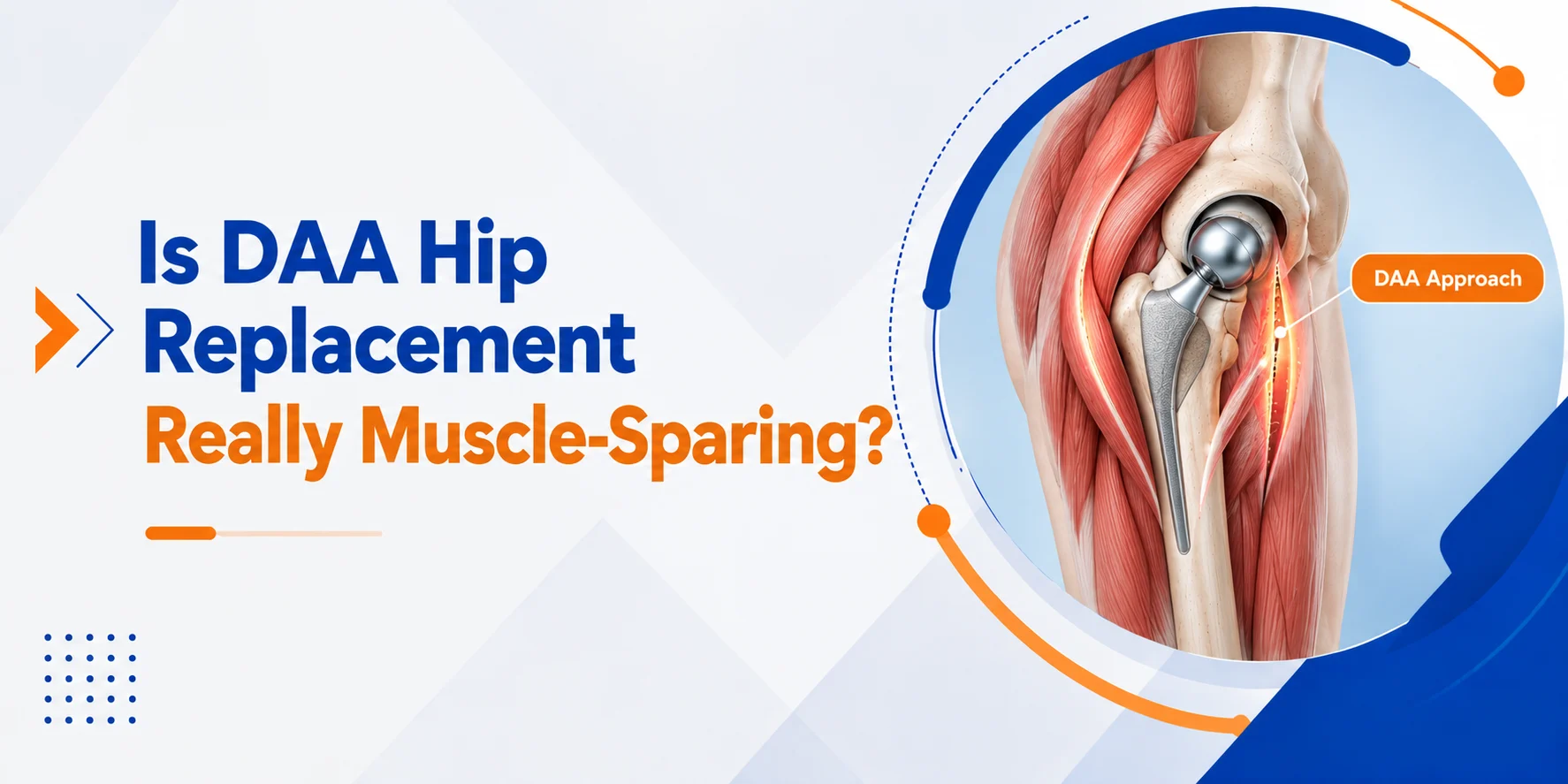
DAA hip replacement earns its muscle-sparing reputation because of the route the surgeon takes to reach the hip joint. The approach works through a natural gap between two front hip muscles, the sartorius and tensor fasciae latae, known as the Smith-Petersen interval, rather than cutting through or detaching muscle tissue to reach the joint. This anatomical route is what separates direct anterior hip replacement from techniques that require releasing muscle from bone and reattaching it afterward.
According to Dr. Avinashdev Upadhyay, an orthopedic surgeon in Navi Mumbai, “The muscle sparing claim is not marketing term. It describes exactly where the incision goes, between muscles rather than through them.”
Dr. Upadhyay’s Clinical Tip
“Ask your surgeon which internervous plane they use for DAA. The Smith-Petersen interval only stays muscle sparing when the dissection respects that natural plane throughout the procedure.”
Wondering if DAA fits your hip replacement plan?
What Makes the DAA Approach Muscle-Sparing?
The anatomy behind DAA is what earns it the muscle sparing label.

This precise anatomical access is central to why direct anterior hip replacement supports faster early mobility. Explore Direct Anterior Hip Replacement with Dr. Upadhyay to see if this approach fits your case.
How Does Muscle Sparing Affect Recovery and Outcomes?
The muscle sparing nature of DAA carries real practical consequences after surgery.

These recovery differences show up in how soon patients return to daily movements like sitting on the floor. Read more on Sitting Cross-Legged or on the Floor After Hip Replacement to see how muscle sparing surgery shapes that timeline.
Why Choose Dr. Avinashdev Upadhyay for DAA Hip Replacement?
Dr. Avinashdev Upadhyay holds a Fellowship in Robotic Hip & Knee Joint Replacement from Australia, with specific training in the Direct Anterior Approach. He has performed 500 plus joint replacements and evaluates hip anatomy carefully before recommending DAA, since the approach still requires the correct internervous plane to remain genuinely muscle sparing.
Every DAA case follows a structured technique that respects the Smith-Petersen interval from incision to closure. This precision is what allows many patients to reach early recovery milestones sooner than traditional posterior surgery permits. Call +91 93260 59062 to discuss your DAA hip replacement options.
Patient Stories
Frequently asked questions
1. Is DAA hip replacement actually muscle sparing?
Yes. The Direct Anterior Approach works through the natural gap between the sartorius and tensor fasciae latae, so major hip muscles are neither cut nor detached during standard DAA surgery.
2. What is the Smith-Petersen interval?
It is the anatomical gap between two hip muscles, each supplied by a different nerve, that surgeons use to access the hip joint without cutting through muscle tissue.
3. Does DAA require fewer hip precautions than posterior surgery?
Generally yes. Because DAA spares the muscles that stabilize the hip, patients often face fewer positional restrictions than after posterior approach surgery.
4. Is every DAA hip replacement equally muscle sparing?
Not necessarily. The approach stays muscle sparing only when the surgeon maintains the correct internervous plane throughout the procedure.
References:
Disclaimer: This blog is for educational purposes only. Whether DAA is appropriate depends on individual hip anatomy assessed by a surgeon.