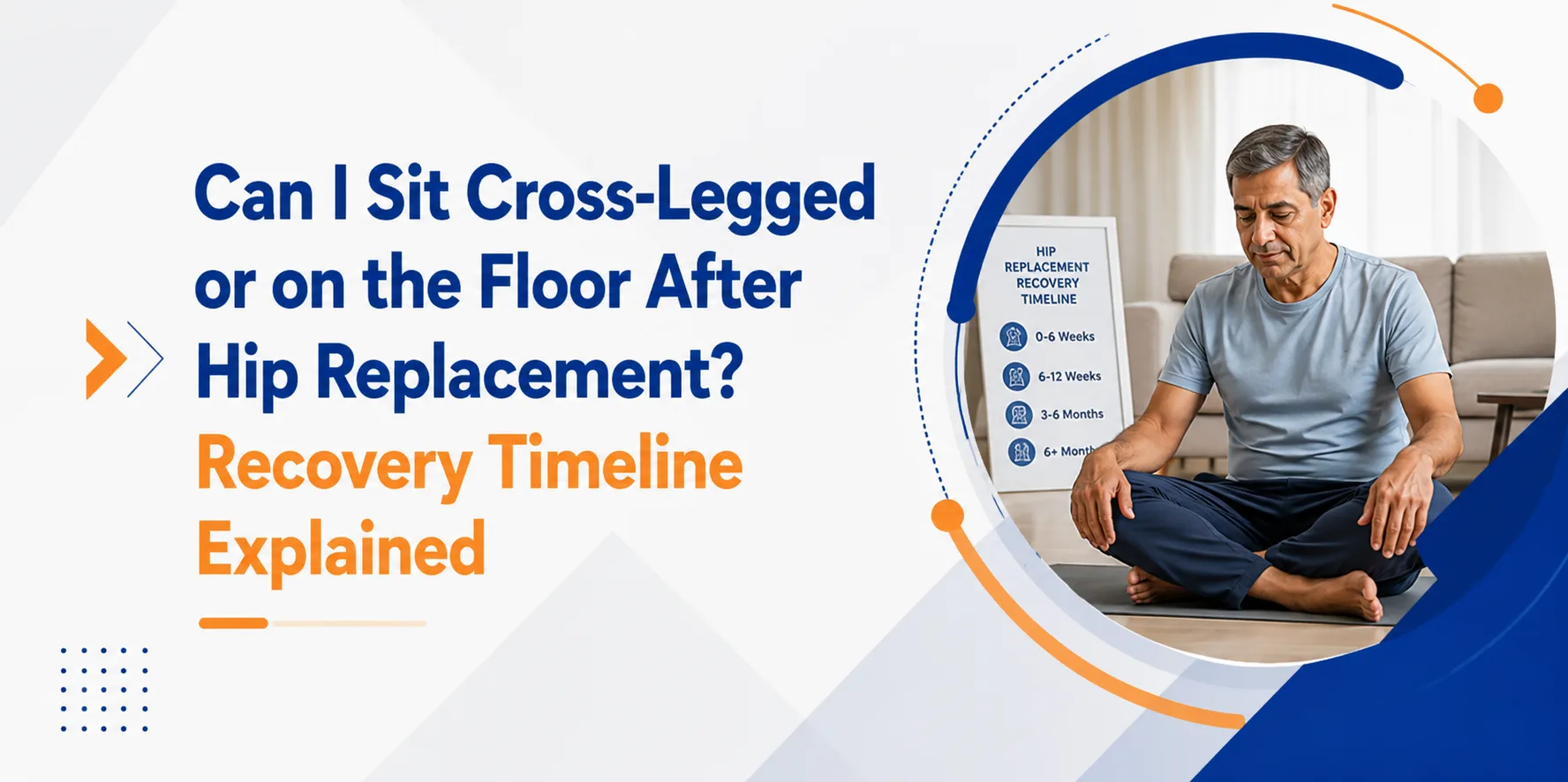
Cross legged and floor sitting positions carry a genuine risk of dislocation in the early weeks after hip replacement. The first 6 to 12 weeks are the highest risk window. During this time the hip must bend past 90 degrees and rotate outward under load. This applies to cross legged sitting, Indian style floor sitting, yoga postures, and namaz alike. Most surgeons clear these positions only in gradual stages once the muscles around the new joint have healed and regained stability.
According to Dr. Avinashdev Upadhyay, an orthopedic surgeon in Navi Mumbai, “Patients understandably want their old flexibility back quickly. That instinct is precisely what needs to be managed carefully in the early weeks and not encouraged.”
Dr. Upadhyay’s Clinical Tip
“One of the most common mistakes I see is patients trying floor sitting because they feel no pain. Pain is not the best indicator of healing. Your muscles and capsule need time to stabilise the implant before returning to deep hip positions.”
Wondering when it’s safe to sit cross legged again?
Why Is Cross Legged Sitting Risky After Hip Replacement?
The risk relates to how far the joint is required to move and not simply comfort.
Deep Flexion Positions: Cross legged sitting, Indian style floor sitting, seated yoga postures, and namaz all bend the hip well beyond 90 degrees. This range is precisely what a newly replaced joint cannot yet tolerate safely.
External Rotation: These positions also rotate the leg outward. That adds a second point of stress on top of deep flexion and compounds the overall risk.
DAA vs Posterior Precautions: Patients treated with the Direct Anterior Approach generally face fewer flexion related restrictions. Posterior approach patients avoid deep flexion and internal rotation for longer.
Dislocation Window: The capsule and surrounding muscles need several weeks to tighten and hold the implant securely in place. Before that the risk stays real.
Since the surgical approach itself affects how soon these positions become safe, the technique used matters as much as the precautions that follow it. Explore hip and knee treatment options with Dr. Upadhyay.
When Is It Safe to Sit Cross Legged or on the Floor Again?
There is no single date for every patient though most follow a similar recovery pattern.
Six to Twelve Week Mark: Most surgeons reassess readiness for floor sitting yoga or namaz once healing reaches this early milestone. It is a checkpoint and not a guarantee.
Strength Over Time: Readiness isn’t about the calendar. It comes down to hip and core strength, and deep positions only become safe again once that strength has actually returned, not simply once enough weeks have gone by.
Who Should Avoid It Long Term: Patients with a history of dislocation or revision hip surgery or significant muscle weakness may need to avoid deep floor sitting indefinitely.
Gradual Reintroduction: Even after clearance easing back into cross legged sitting or namaz beats resuming old habits abruptly.
A structured recovery plan brings clarity to this timeline from the outset. For a look at conservative joint care more broadly, see Dr. Upadhyay’s guide on natural remedies for knee pain and when they call for a specialist.
Can I Use an Indian Toilet After Hip Replacement?
Using an Indian toilet requires deep hip flexion similar to squatting. Most patients should avoid it during the first few months after surgery unless specifically cleared by their surgeon. A Western toilet or raised toilet seat is generally recommended during early recovery.
Why Choose Dr. Avinashdev Upadhyay for Hip Replacement Recovery?
Dr. Avinashdev Upadhyay brings over 10 years of experience and 500+ joint replacements performed. He is fellowship trained in robotic hip and knee surgery from Australia with additional training from Hinduja Hospital Mumbai. His preferred Direct Anterior Approach spares the major hip muscles rather than cutting through them and supports a safer faster recovery. Every patient receives a clear written movement plan built around their individual healing so milestones such as floor sitting yoga or namaz are never left to chance.
For hip replacement patients this means fewer dislocation concerns and a more confident return to everyday positions. Call +91 93260 59062 to plan your recovery.
Patient Stories
Frequently asked questions
1. Can I do yoga after hip replacement?
Many patients return to yoga after recovery, but deep hip flexion poses should only be resumed once your surgeon confirms it is safe. Modifications may be necessary depending on the surgical approach and your flexibility.
2. Can I sit on the floor permanently after DAA hip replacement?
Many patients undergoing Direct Anterior Hip Replacement are able to return to floor sitting after recovery, provided muscle strength and hip stability have returned. However, clearance should always come from your surgeon.
3. Can I squat after hip replacement?
Squatting places the hip in deep flexion. Most patients should avoid deep squats until healing is complete, and should return to them gradually under medical guidance.
4. What happens if I sit cross legged too early?
Sitting cross legged too early increases the risk of hip dislocation, a serious complication that can require repeat surgery. It also strains tissue that hasn’t fully healed. This is why surgeon clearance matters more than how flexible you feel.
References:
Disclaimer: This article is for educational purposes only. If you feel sudden hip pain or a popping sensation after surgery, contact your surgeon immediately.