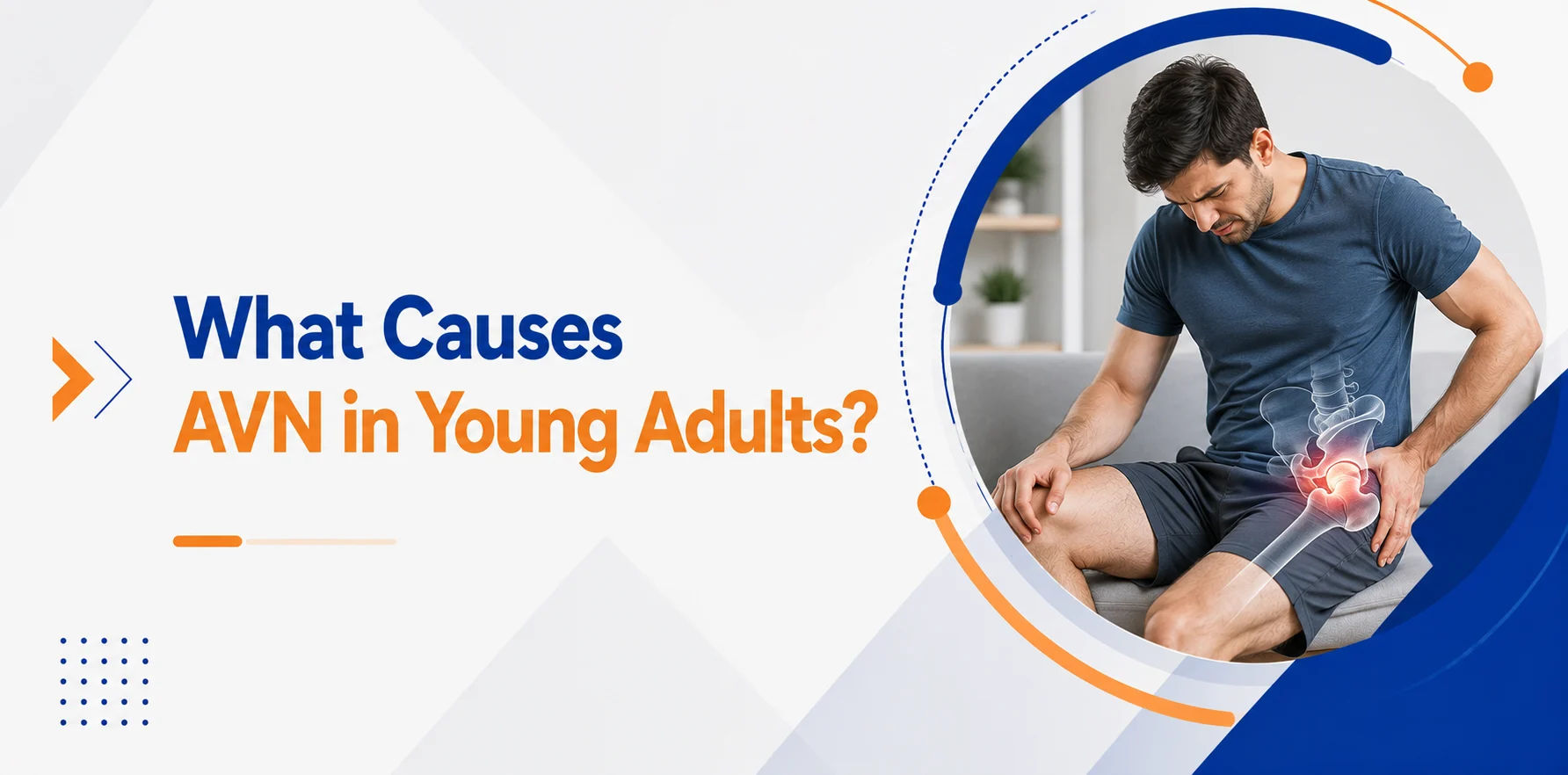
Avascular Necrosis (AVN) in young adults usually traces back to a small number of well known triggers rather than pure chance. Long term steroid use and heavy alcohol consumption are two of the most common causes since both interfere with blood flow to the bone over time. Direct trauma to the hip can also cut off circulation suddenly while some cases occur without any clear cause at all. Regardless of the trigger the underlying problem stays the same. A loss of blood supply that slowly breaks down bone tissue.
According to Dr. Avinashdev Upadhyay, an orthopedic surgeon in Navi Mumbai, “Most young AVN patients are surprised to learn steroids or alcohol played a role. The cause matters less than catching the damage early.”
Worried steroids or alcohol use may be affecting your hip?
What Causes AVN in Young Adults?
A handful of factors account for most cases seen in clinics.
Steroids: Long term or high dose corticosteroid use is one of the most common causes of AVN in young patients. Steroids affect fat metabolism and the small vessels supplying the femoral head. This includes patients who received high dose corticosteroids during COVID-19 treatment. AVN can surface months later, so persistent groin pain after steroid therapy of any kind should not be ignored.
Alcohol: Heavy and prolonged alcohol use raises fat levels in the blood which can block small vessels feeding the bone. This risk grows with both quantity and duration.
Trauma: Hip fractures or dislocations can tear the blood vessels supplying the femoral head directly. AVN may develop months after the injury even once it seems healed.
Smoking: Smoking can reduce blood supply to bone tissue on its own, and the risk climbs further when it’s combined with steroid use or heavy alcohol intake.
Idiopathic AVN: In a meaningful share of cases no clear cause is ever identified despite thorough testing. These idiopathic cases still respond to the same early treatment principles.
Whatever the trigger the early response strategy stays similar. Explore hip and knee treatment options with Dr. Upadhyay.
Who Is at Risk and When Should You See a Specialist?
Some patients carry a higher baseline risk than others, and certain symptoms deserve prompt attention rather than a wait and see approach:
- Deep groin pain
- Pain while walking
- Difficulty climbing stairs
- Limping
- Pain after prolonged standing
- Reduced hip movement
Sickle Cell Disease: Sickle cell disease restricts blood flow through small vessels making AVN a recognized complication. Patients with this condition are often monitored closely for hip symptoms.
Autoimmune Diseases: Conditions like lupus raise AVN risk partly through disease activity and partly through the steroids often used to treat them. This overlap makes monitoring important.
Early MRI: MRI can detect AVN months before it would show up on a standard X-ray. Catching it at this stage keeps more treatment options open.
When to See a Specialist: Persistent groin or hip pain alongside any of these risk factors deserves evaluation rather than a wait and watch approach.
The earlier the route to a specialist the more the natural joint can be protected, and for patients whose AVN does eventually progress to surgery, the same care extends into hip replacement recovery itself.
Why Choose Dr. Avinashdev Upadhyay for AVN Care?
Dr. Avinashdev Upadhyay has treated over 2,000 AVN patients without needing surgery in the majority of cases. He is fellowship trained in robotic joint replacement from Australia and focuses first on preserving the natural joint wherever possible. Every AVN case is staged carefully using imaging before deciding between non surgical care and surgery.
This staged approach is what keeps many young AVN patients out of the operating room altogether. Call +91 93260 59062 to plan your evaluation.
Early diagnosis can preserve the natural hip.
Patient Stories
Frequently asked questions
1. Can gym workouts cause AVN?
No. Exercise itself does not cause AVN. However, persistent groin pain after exercise should not always be assumed to be a muscle strain, especially in people with known AVN risk factors.
2. Does everyone taking steroids get AVN?
No. Most people who take steroids never develop AVN. The risk depends on the dose, duration, individual susceptibility, and other medical conditions.
3. Can AVN affect both hips?
Yes. AVN can occur in both hips, particularly when caused by steroids, alcohol, or systemic diseases. If AVN is diagnosed in one hip, the other hip may also need evaluation.
4. What causes AVN in young adults?
The main causes are long term or high dose steroid use, heavy alcohol intake, direct hip trauma, and smoking. Sickle cell disease and autoimmune conditions also raise the risk. In some cases, no clear cause is ever found.
References:
Disclaimer: This blog is for educational purposes only. If you have persistent hip pain or risk factors for AVN, consult a specialist for proper evaluation.