
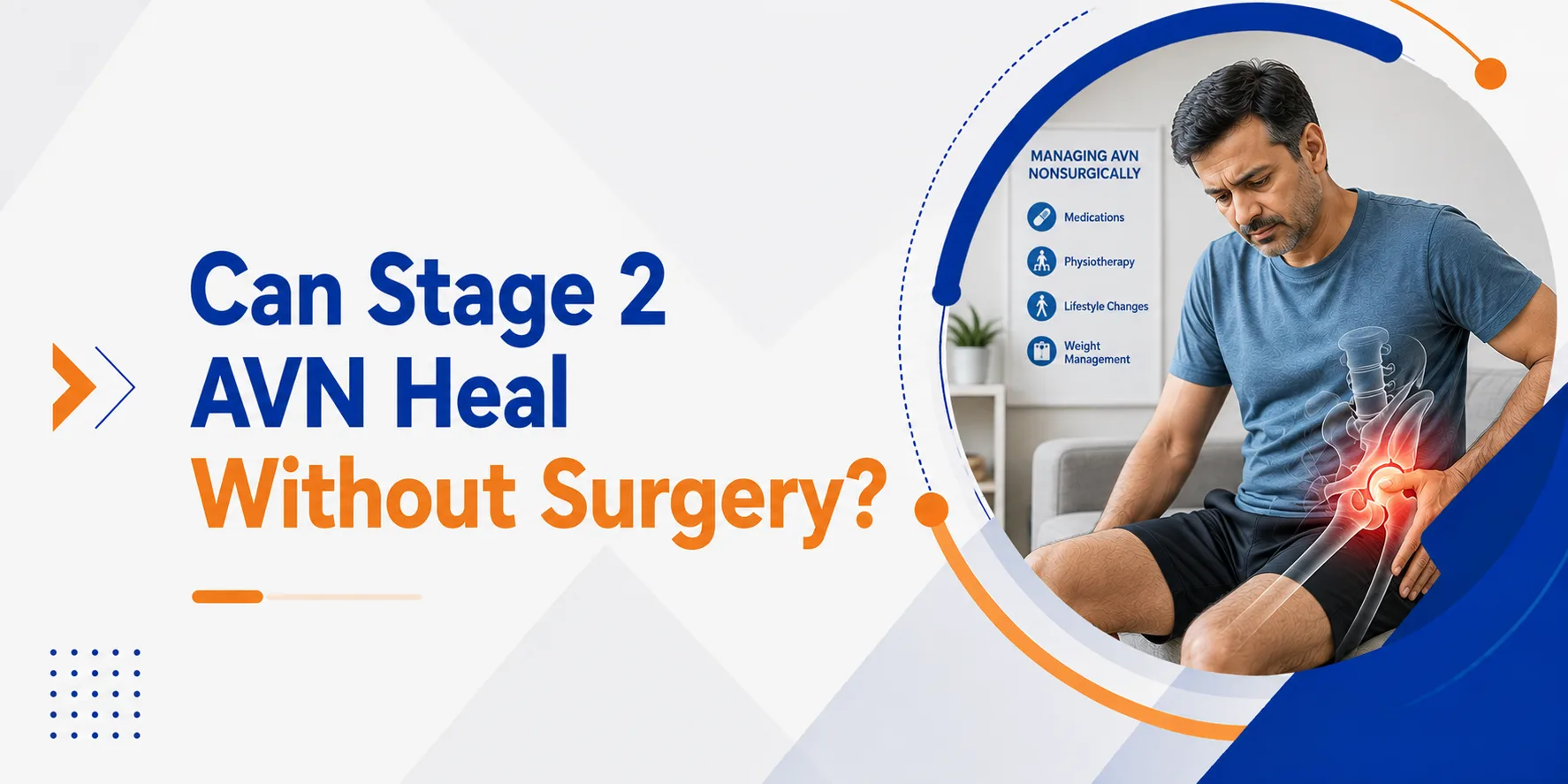
Stage 2 Avascular Necrosis (AVN) still leaves a real window for non surgical care since the bone has not yet collapsed at this point. Options like core decompression, certain medications, and structured activity changes can sometimes slow the disease and protect the natural joint, even though dead bone itself rarely regenerates on its own. Because the femoral head still holds its round shape at this stage, the goal becomes reducing stress on the joint before that shape is lost.
According to Dr. Avinashdev Upadhyay, an orthopedic surgeon in Navi Mumbai, “Stage 2 is the window we work hardest to protect. Once the head collapses, the options narrow fast. Everything we do at this stage is aimed at buying the joint more time before that happens. The patients who do best are the ones who keep coming back for imaging, not just the ones who feel fine.”
Dr. Upadhyay’s Clinical Tip
“One of the most common mistakes I see is patients assuming that feeling fine means the disease has stopped. Pain is not the best indicator of healing in Stage 2 AVN. The bone can still be at risk even when there’s no discomfort at all, which is exactly why follow up MRIs matter more than symptoms.”
Wondering if your Stage 2 AVN still has non surgical options?
What Does Stage 2 AVN Actually Mean?
Staging decides which treatments are still realistically on the table.
What Stage 2 Means: The femoral head still holds its round shape with no collapse. Bone changes are visible on imaging but the joint surface itself remains intact.
MRI Findings: MRI typically shows marrow edema and a clearly defined necrotic lesion at this stage. The rounded contour of the bone is still preserved, unlike later stages.
Core Decompression: This procedure relieves internal bone pressure and encourages new blood vessel growth into the affected area. It works best while the shape is still intact, which is exactly the Stage 2 window.
Medicines: Bisphosphonates, statins, or anticoagulants are used selectively depending on the suspected cause. They aim to slow disease progression rather than reverse existing damage.
Catching AVN at this stage keeps meaningful options open. Explore Direct Anterior Hip Replacement with Dr. Upadhyay for cases that do progress further.
Can Stage 2 AVN Really Be Managed Without Surgery?
Management works, but it comes with real limits worth understanding upfront.
Activity Modification: Reducing high impact movement and limiting weight bearing load takes pressure off the femoral head. This alone can meaningfully slow progression in some patients.
Non Surgical Ceiling: Results vary significantly between patients. Some stabilize for years while others progress despite consistent treatment.
Monitoring: Regular follow up MRIs matter more than symptoms here, since pain levels don’t always track with what’s happening inside the bone.
When Surgery Is Unavoidable: Once collapse begins or pain worsens despite conservative care, joint preserving options run out and replacement becomes the realistic path forward.
Understanding what causes AVN in the first place shapes how aggressively Stage 2 gets managed. Read more on what causes AVN in young adults for the fuller picture.
Why Choose Dr. Avinashdev Upadhyay for AVN Care?
Dr. Avinashdev Upadhyay has successfully treated over 2,000 AVN patients without surgical intervention. Fellowship trained in robotic joint replacement in Australia, he applies that same clinical precision to staging and monitoring AVN. Every case begins with thorough MRI evaluation, as a Stage 2 hip and a Stage 3 hip require distinctly different treatment plans.
Wherever core decompression, medication, or activity modification can preserve the joint, that remains the preferred course of treatment. This staged, imaging-led approach has helped many Stage 2 patients avoid surgery for years, sometimes indefinitely. Call +91 93260 59062 to schedule your evaluation.
Patient Stories
Frequently asked questions
1. Can Stage 2 AVN heal completely without surgery?
Rarely. Non surgical care like core decompression and medications can slow the disease and protect the joint for years. Dead bone itself, however, does not regrow on its own.
2. What is core decompression for AVN?
Core decompression is a minimally invasive procedure that drills into the femoral head to relieve internal pressure. This encourages new blood vessel growth and can delay or prevent collapse in early stage AVN.
3. How is Stage 2 AVN different from Stage 1?
Both stages occur before the femoral head collapses, but Stage 2 shows more visible changes on MRI, such as marrow edema and a defined lesion. The rounded shape of the bone still remains intact in both stages.
4. When does Stage 2 AVN require surgery?
Surgery becomes necessary once the bone shows early signs of collapse or when pain continues despite structured non surgical treatment. At that point, joint preserving options become far more limited.
References:
Disclaimer: This blog is for educational purposes only. If you have persistent hip pain or a known AVN diagnosis, consult a specialist for personalized evaluation.