
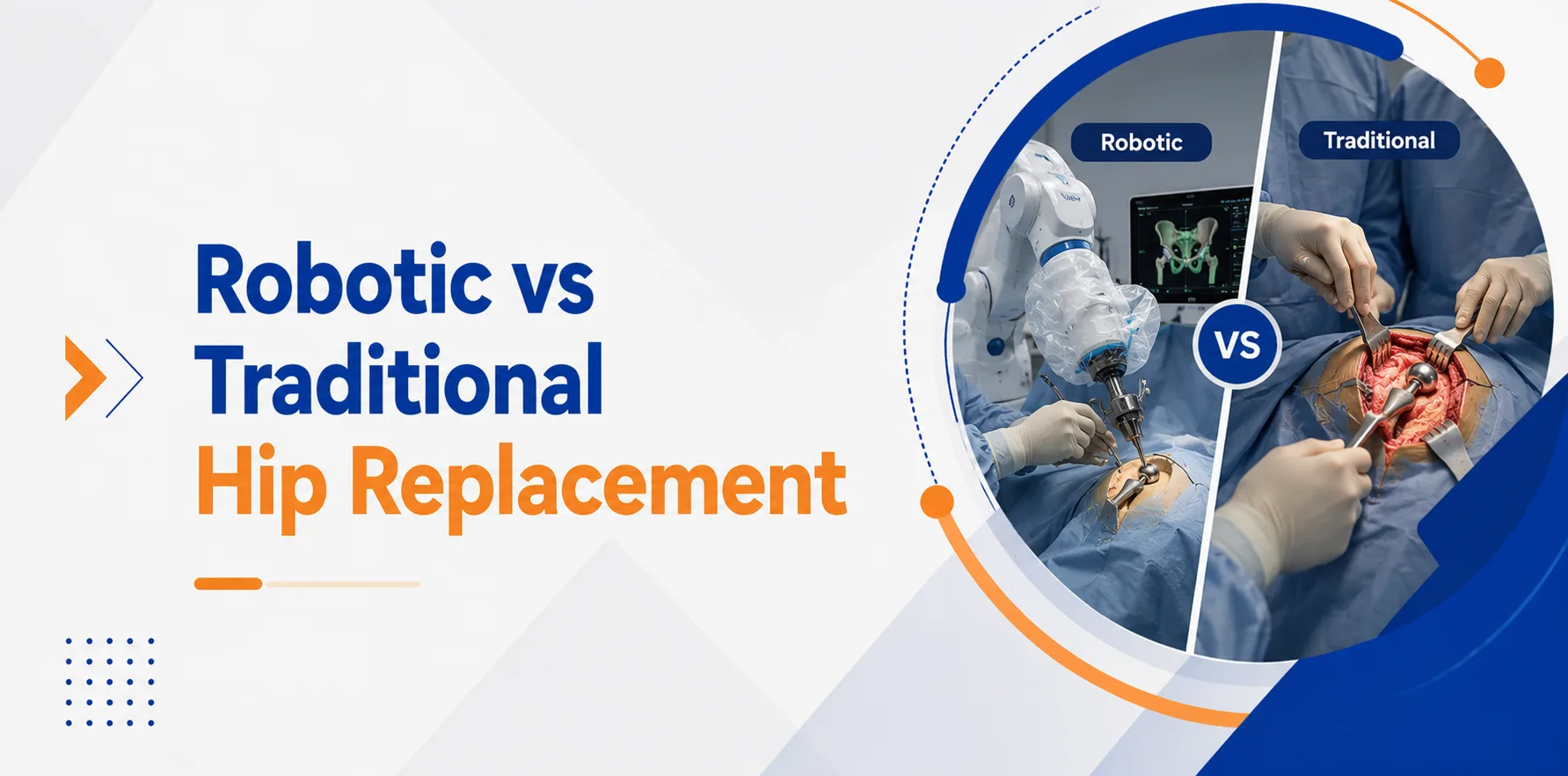
Robotic and traditional hip replacement aim for the same outcome, a new joint that moves and feels natural again, but the path there looks different. Robotic systems build a 3D surgical plan from CT imaging and guide the surgeon’s instruments with real time feedback during the operation. Traditional surgery relies on standard X-rays and manual technique refined through years of experience. Neither route removes the need for surgical skill since the outcome still depends on how that plan or experience gets applied on the table.
According to Dr. Avinashdev Upadhyay, an orthopedic surgeon in Navi Mumbai, “The robotic arm only helps as much as the surgeon guiding it. Technology supports the plan. It never replaces surgical judgment.”
Wondering if robotic hip replacement fits your case?
What Does Robotic Hip Replacement Actually Do?
The technology adds precision at specific steps and not the entire operation.
What the Robot Does: It builds a 3D model of the hip from CT scans and helps position implants within tighter tolerances during surgery. This can improve alignment accuracy in complex cases.
What It Doesn’t Do: The robot doesn’t operate on its own or make surgical decisions. Every cut and placement still happens under the surgeon’s direct control at every step.
Benefits: Improved implant positioning can support better joint mechanics and reduced blood loss in several studies.
Limitations: Robotic systems can add operative time and aren’t necessary for every case. Straightforward hips often do just as well with traditional technique.
Precision tools work best in hands that already know how to use them well. Explore Direct Anterior Hip Replacement with Dr. Upadhyay.
Robotic vs Traditional Hip Replacement: How Do They Compare?
|
Feature |
Robotic Hip Replacement |
Traditional Hip Replacement |
|
Planning |
3D CT based surgical map |
Standard X-ray based estimation |
|
Precision |
Robotic arm guided positioning |
Surgeon’s manual technique |
|
Blood Loss |
Often lower in comparative studies |
Depends on surgeon and case |
|
Operative Time |
Typically slightly longer |
Typically shorter |
|
Cost |
Higher due to added technology |
Generally lower |
|
Best Suited For |
Complex anatomy or revision cases |
Straightforward standard cases |
Cost: Robotic surgery generally costs more because of the imaging and equipment involved. Pricing still varies by hospital and case complexity.
When Robotics Is Useful: Robotic guidance helps most with complex anatomy, revision surgery, or extra accuracy needs.
Surgeon Expertise Still Leads: The robot follows a plan while the surgeon builds it. Experience remains the biggest factor in outcome regardless of technology used.
Availability and Access: Robotic systems aren’t present at every hospital, so traditional surgery remains the practical choice in many settings today.
Whichever approach fits your case the surgeon behind it matters most, and that same care continues well beyond surgery day, into sitting cross legged after hip replacement and the rest of recovery.
Why Choose Dr. Avinashdev Upadhyay for Hip Replacement?
Dr. Avinashdev Upadhyay is fellowship trained in robotic hip and knee replacement from Australia and performs both robotic and traditional procedures based on what each case actually needs. With over 10 years of experience and 500+ joint replacements he chooses the surgical approach around the patient rather than defaulting to one method for every case.
The decision to use robotic guidance is based on your anatomy, not routine. Call +91 93260 59062 to discuss which approach fits your hip replacement.
Patient Stories
Frequently asked questions
1. Is robotic hip replacement more accurate?
Studies suggest robotic assistance can improve the accuracy and consistency of implant positioning.
2. Does robotic hip replacement last longer?
Current evidence suggests improved implant positioning may contribute to long-term performance, but long-term implant survival also depends on patient activity, bone quality, and surgical technique.
3. Can robotic surgery reduce leg-length difference?
In selected patients, robotic planning may help improve leg-length restoration and implant positioning.
4. Is robotic surgery safer?
Both robotic and conventional hip replacement are considered safe when performed by experienced surgeons. Robotic assistance is designed to enhance precision, not replace surgical expertise.
References:
Disclaimer: This blog is for educational purposes only. The right surgical approach depends on individual anatomy and should be discussed directly with your surgeon.