Hip replacement in your 30s or 40s might sound premature, but age by itself never rules a patient out. Younger adults undergo total hip replacement fairly often, usually because osteoarthritis, hip dysplasia, or AVN has already caused severe joint damage and...
Replacing both hips or both knees in a single surgery is technically possible. It’s called simultaneous bilateral joint replacement. Many surgeons still recommend splitting the two sides into staged procedures, done weeks or months apart, because spacing the...
Driving after DAA hip replacement depends heavily on which leg was operated on and how quickly pain medication is discontinued. Left leg surgery or an automatic car typically allows driving to resume within two to four weeks. Right leg surgery with a manual car...
Avascular Necrosis (AVN) and hip arthritis get mixed up a lot. Both eventually bring hip pain and stiffness, but the damage starts in completely different places. AVN begins when blood supply to the femoral head gets cut off, and that section of bone starts dying from...
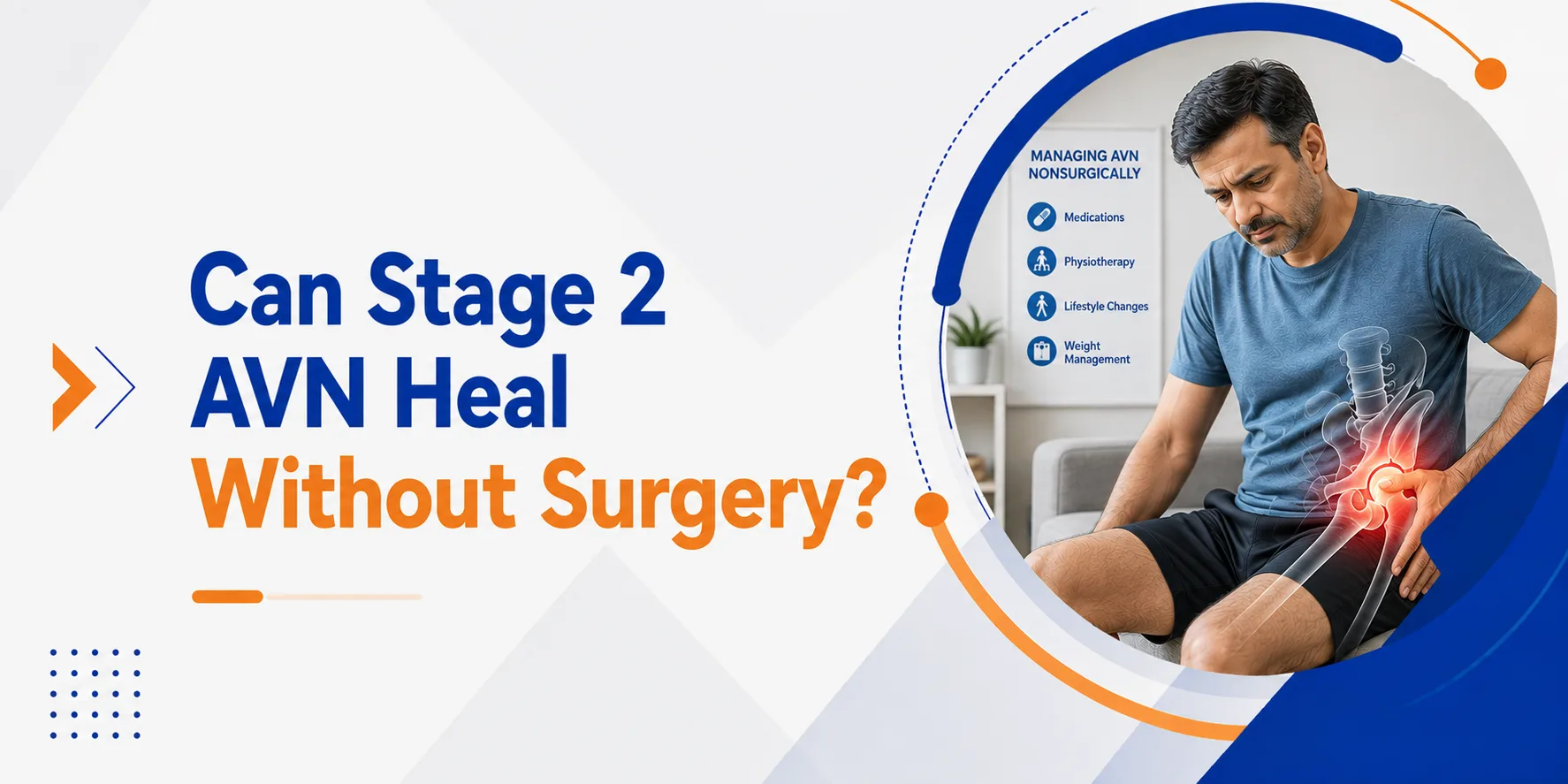
Stage 2 Avascular Necrosis (AVN) still leaves a real window for non surgical care since the bone has not yet collapsed at this point. Options like core decompression, certain medications, and structured activity changes can sometimes slow the disease and protect the...